
Introduction: When Hope Becomes a Weapon
Being scammed is a devastating experience. The financial loss is painful, but the emotional toll—the feelings of shame, anger, and betrayal—can be even worse. In this vulnerable state, victims are desperate for a solution, for someone who can undo the damage and recover their stolen funds. This desperation creates a cruel opportunity for a particularly insidious type of fraud: the recovery scam.
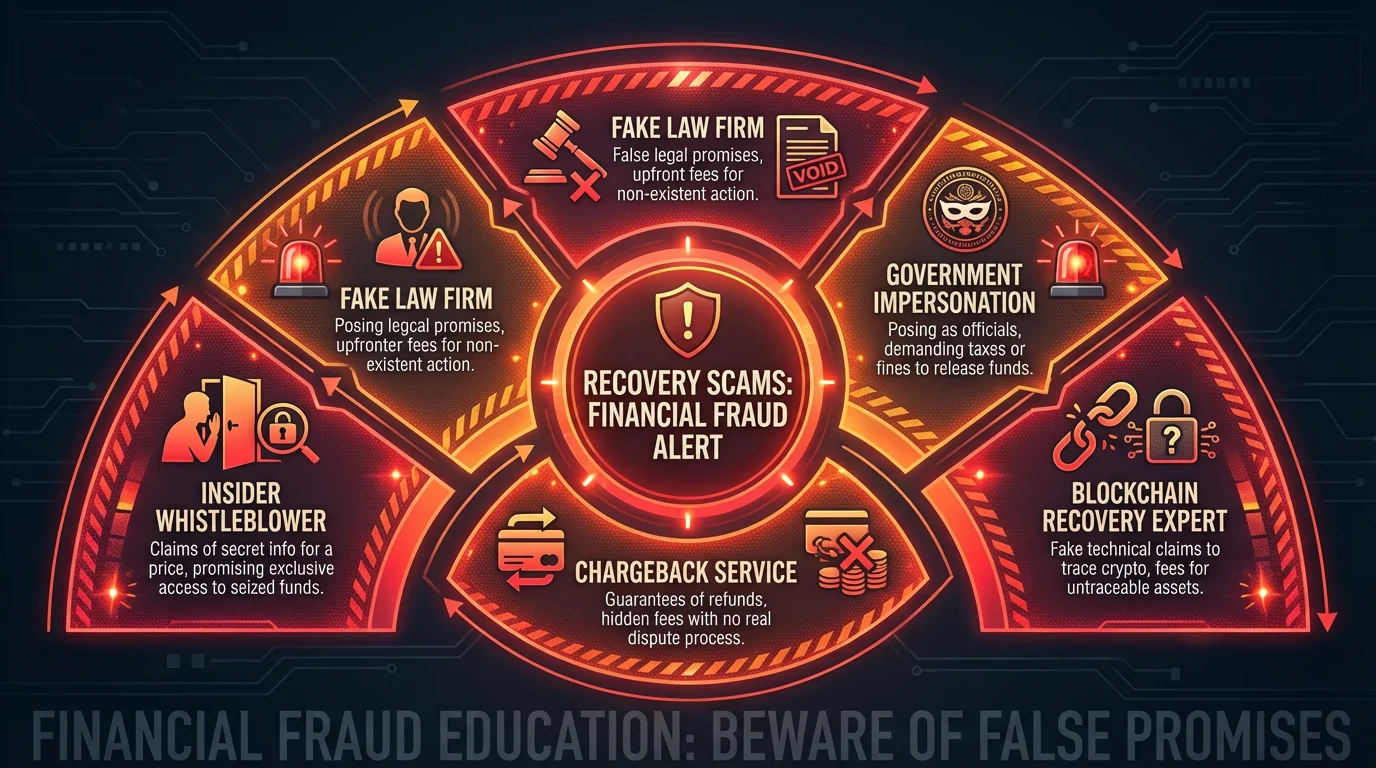
Recovery scammers are predators who specifically target individuals who have already been victimized. They present themselves as saviors—lawyers, government officials, or specialized recovery agents—who claim they can retrieve the lost money. But in reality, they are simply the second act of the same tragedy, designed to extract even more money from someone who can least afford to lose it.
This article exposes the five most common types of recovery scams targeting Forex fraud victims in 2025. We will provide detailed case studies, explain the psychological tactics used, and arm you with the knowledge to protect yourself. If you have been scammed, this information could save you from being scammed again.
—
H2: Understanding the Recovery Scam Ecosystem
Before we examine specific scam types, it’s important to understand how recovery scammers operate and why they are so effective.
H3: How Do They Find Their Victims?
Recovery scammers obtain lists of scam victims through several methods:
- Data Breaches: When a fraudulent broker or EA seller is shut down, their client databases are sometimes leaked or sold on the dark web.
- Public Complaints: Victims who post about their experience on forums, social media, or review sites inadvertently make themselves visible to recovery scammers.
- Affiliation with the Original Scam: In some cases, the “recovery service” is run by the same criminal organization that perpetrated the original fraud. They already have all your information.
H3: The Psychological Exploitation
Recovery scammers are experts in emotional manipulation. They understand that their targets are in a state of heightened vulnerability. They exploit:
-
- Hope: The desperate desire to believe that the money can still be recovered.
- Shame: Victims are often embarrassed about being scammed and may not have reported it to authorities or discussed it with friends and family. This isolation makes them more susceptible.
- Sunk Cost Fallacy: Having already lost a significant sum, victims feel they must do “everything possible” to get it back, even if it means taking another risk.
—
H2: The 5 Most Common Recovery Scams
H3: Recovery Scam #1: The “Law Firm” or “Legal Recovery” Scam
The Approach:
You receive an email or phone call from someone claiming to represent a law firm that specializes in Forex fraud recovery. They say they have been tracking the scammer and have successfully recovered funds for other victims. They offer to take your case.
The Hook:
They sound professional, use legal jargon, and may even have a website with stock photos of lawyers in suits. They claim to have connections with international law enforcement or regulatory bodies.
The Scam:
To “initiate the legal process,” they require an upfront retainer fee, often ranging from $1,000 to $5,000. They may also ask for additional fees for “court filings,” “international transfer costs,” or “investigation expenses.” Once you pay, they either disappear immediately or string you along with fake updates for a few weeks before ceasing all communication.
Case Study: “Global Recovery Associates”
In early 2025, a victim named Sarah (name changed) lost $15,000 to an unregulated broker. Two months later, she was contacted by “Global Recovery Associates,” claiming to be a UK-based law firm. They provided a professional-looking website and even sent her a “case assessment” document. They requested a £3,000 retainer. Desperate, Sarah paid. After two weeks of vague email updates, all communication stopped. The website went offline. Sarah had been scammed twice, losing a total of $18,000.
Red Flags:
-
- Unsolicited contact via email or cold call.
- Request for upfront fees before any work is done.
- Vague explanations of the legal process.
- Cannot provide verifiable credentials or a physical office address.
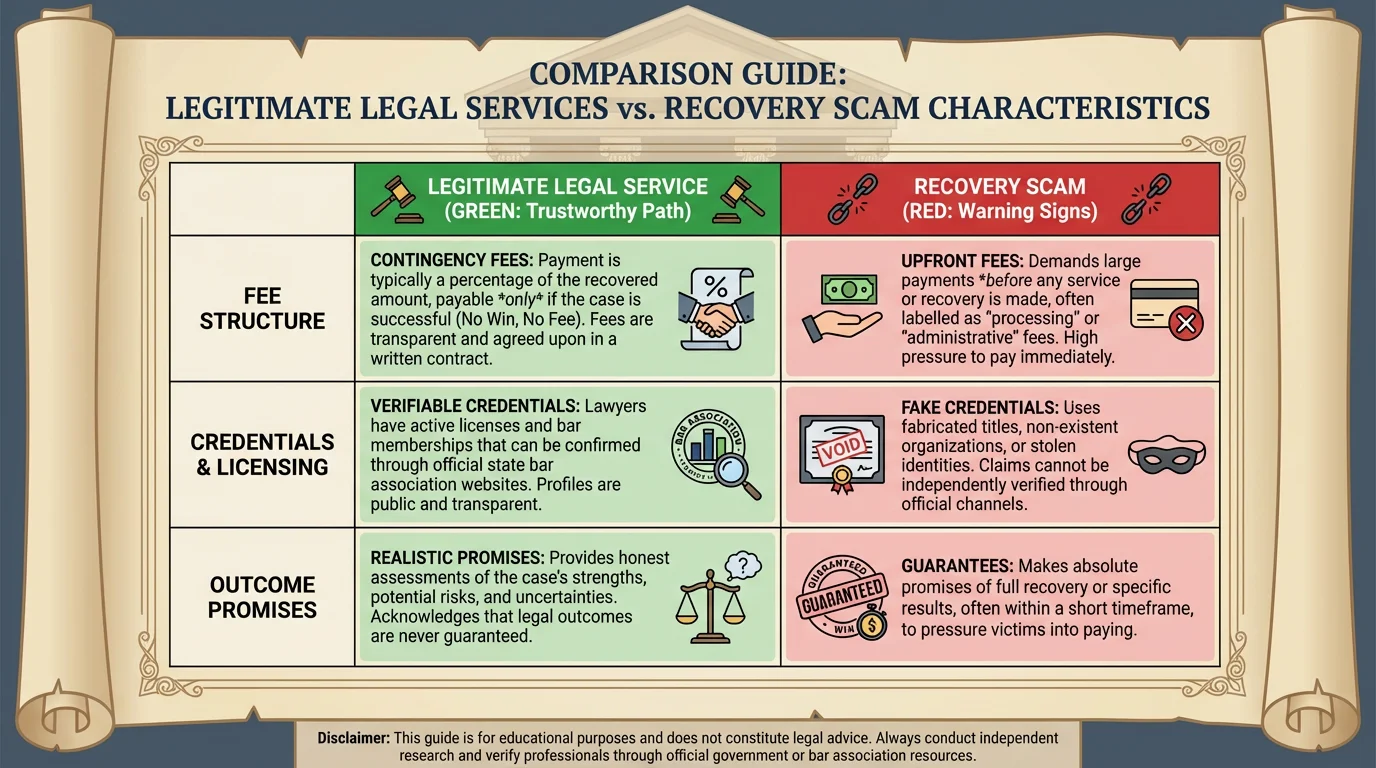
| Legitimate Legal Service | Recovery Scam “Law Firm” |
|---|---|
| Works on contingency (paid only if successful) or has clear, upfront fee structure explained in a contract. | Demands large upfront fees with vague justifications. |
| Can provide verifiable bar association membership and physical office. | Uses generic website, stock photos, and cannot verify credentials. |
| Provides detailed, written legal strategy and realistic timelines. | Provides vague promises and guarantees of success. |
—
H3: Recovery Scam #2: The “Government Agency” or “Regulatory Authority” Impersonation
The Approach:
You receive a call or email from someone claiming to be from the CFTC, FCA, FBI, or another official regulatory or law enforcement body. They say they have recovered your funds as part of a larger investigation and need your information to process the return.
The Hook:
They use official-sounding language, may spoof the phone number to make it appear as if it’s coming from a government agency, and create a sense of urgency.
The Scam:
To “release” your funds, they claim you must first pay taxes, processing fees, or “anti-money laundering verification charges.” These fees can range from a few hundred to several thousand dollars. Once paid, they disappear.
Case Study: “The CFTC Recovery Division”
John (name changed) lost $20,000 to a Ponzi scheme. Six months later, he received a call from someone claiming to be from the “CFTC Recovery Division.” The caller ID showed a Washington, D.C. area code. They told John that his $20,000 had been frozen in a recovery account and that he needed to pay a $2,500 “IRS tax clearance fee” to have it released. Believing it was legitimate, John paid. He never heard from them again. The CFTC does not have a “Recovery Division,” and they never call victims to request fees.
Red Flags:
-
- Unsolicited contact claiming to be from a government agency.
- Request for upfront fees to “release” funds.
- Pressure to act quickly.
- Use of unofficial email addresses (e.g., @gmail.com instead of an official .gov domain).
How to Verify:
If you receive such a contact, do not engage. Hang up or delete the email. Then, independently look up the official phone number of the agency they claim to represent (from the agency’s official website) and call them directly to verify. Real government agencies do not operate this way.
—
H3: Recovery Scam #3: The “Blockchain Recovery Expert” or “Crypto Tracer”
The Approach:
If your funds were stolen via cryptocurrency, you may be contacted by someone claiming to be a “blockchain forensics expert” or “crypto recovery specialist.” They claim they can trace your Bitcoin or other crypto and recover it.
The Hook:
They use technical jargon about blockchain analysis, wallet addresses, and “decentralized recovery protocols.” They may show you screenshots of blockchain explorers to “prove” they have located your funds.
The Scam:
They charge a hefty upfront fee (often $3,000-$10,000) for their “tracing and recovery services.” In reality, once cryptocurrency is sent to a scammer’s wallet and moved through mixers or exchanges, it is nearly impossible to recover without the cooperation of law enforcement and the exchanges involved—something an individual “expert” cannot achieve.
Case Study: “CryptoTrace Solutions”
Maria (name changed) lost $25,000 in Bitcoin to a fake trading platform. She was contacted by “CryptoTrace Solutions,” who claimed they had successfully recovered millions in stolen crypto. They showed her a blockchain explorer screenshot showing her Bitcoin moving through various wallets. They said they could “freeze” the funds for a $5,000 fee. Maria paid. The company then claimed they needed an additional $3,000 for “legal injunctions.” After Maria paid that as well, all communication ceased. She had lost an additional $8,000.
Red Flags:
-
- Promises to recover cryptocurrency, which is extremely difficult without law enforcement involvement.
- Upfront fees for “tracing” or “freezing” services.
- Use of technical jargon to confuse and intimidate.
Reality Check:
While legitimate blockchain forensics companies exist (e.g., Chainalysis, Elliptic), they work primarily with law enforcement and large institutions, not individual victims. They do not cold-call victims or guarantee recovery.
—
H3: Recovery Scam #4: The “Chargeback Service” or “Bank Dispute Specialist”
The Approach:
You are contacted by a company that claims they specialize in initiating chargebacks or bank disputes to recover funds lost to Forex scams. They claim to have a high success rate and insider knowledge of how to navigate the chargeback process.
The Hook:
They make it sound easy and official, claiming they have relationships with banks and payment processors. They may provide fake testimonials and success stories.
The Scam:
They charge an upfront fee (typically $500-$2,000) to “file the chargeback” on your behalf. In reality, initiating a chargeback is something you can do yourself, for free, by contacting your bank or credit card company. These scammers do nothing, or they submit a poorly constructed dispute that is immediately rejected.
Case Study: “ChargebackPro International”
David (name changed) lost $10,000 via credit card to a scam broker. He was contacted by “ChargebackPro International,” who promised a 90% success rate for a $1,500 fee. David paid. Two weeks later, he received a generic email saying his chargeback had been “submitted.” When he contacted his credit card company directly, they had no record of any dispute being filed. ChargebackPro stopped responding to his emails.
Red Flags:
-
- Charging a fee for a service you can do yourself for free.
- Guarantees of chargeback success (chargebacks are decided by banks and card networks, not by third parties).
- Lack of transparency about their actual process.
What You Should Do Instead:
Contact your bank or credit card company directly. Explain that you were a victim of fraud and request to initiate a chargeback or dispute. This service is free. While success is not guaranteed (especially if significant time has passed), it is your best and only legitimate option.
—
H3: Recovery Scam #5: The “Insider” or “Whistleblower” Scam
The Approach:
You receive a message from someone claiming to be a former employee, partner, or “insider” of the company that scammed you. They claim to have inside information about where your money is and offer to help you recover it.
The Hook:
This approach is particularly convincing because the person may have detailed knowledge about the original scam, making them seem credible. They may express sympathy and anger toward the scammers, positioning themselves as an ally.
The Scam:
They ask for a fee to provide you with the “inside information” or to facilitate the recovery. Alternatively, they may ask you to send a smaller amount of money as a “bribe” or “access fee” to unlock your funds from the scammer’s system.
Case Study: “The Repentant Broker”
Lisa (name changed) lost $12,000 to a scam broker called “ForexElite.” Three months later, she received an email from someone claiming to be a former account manager at ForexElite who had quit in disgust. He said he had access to the company’s internal database and could see that Lisa’s funds were still in a holding account. He offered to help her withdraw the money for a $2,000 “facilitation fee.” Lisa, seeing specific details about her account that seemed to confirm his story, paid the fee. She never heard from him again. It’s likely this “insider” was part of the original scam operation.
Red Flags:
-
- Unsolicited contact from someone claiming inside knowledge.
- Request for any fee or payment to provide information or assistance.
- Appeals to emotion and shared anger toward the scammer.
—
H2: How to Protect Yourself: The Recovery Scam Defense Plan
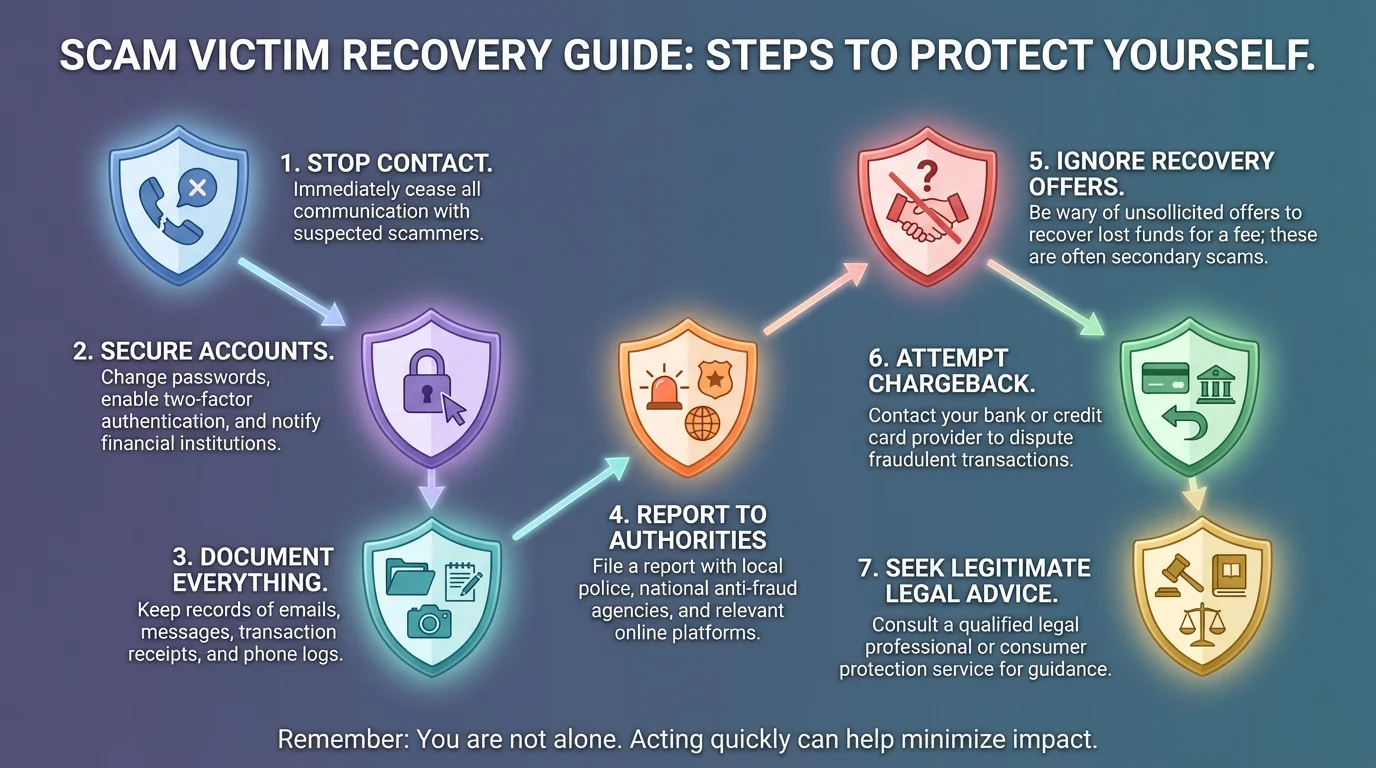
If you have been scammed, you are a target. Here is your defense plan:
H3: Step 1: Accept the Reality
The harsh truth is that once funds are transferred to a scammer, especially via cryptocurrency or to an offshore, unregulated entity, the chances of recovery are extremely low. Accepting this reality is painful, but it is the first step in protecting yourself from a second scam.
H3: Step 2: Ignore All Unsolicited Recovery Offers
Any unsolicited contact offering to help you recover your funds is a scam. There are no exceptions to this rule. Legitimate recovery efforts are not initiated via cold calls, emails, or social media messages.
H3: Step 3: Report the Original Scam to Authorities
File a report with:
- Your national financial regulator (e.g., CFTC, FCA, ASIC).
- Your local law enforcement or cybercrime unit.
- The FBI’s Internet Crime Complaint Center (IC3) if you are in the U.S.
- Action Fraud if you are in the UK.
While this may not lead to immediate recovery, it creates an official record and contributes to larger investigations.
H3: Step 4: Attempt a Chargeback (If Applicable)
If you paid via credit card or certain payment processors, contact them directly and initiate a chargeback or dispute. Do this yourself; do not pay a third party.
H3: Step 5: Seek Legitimate Legal Advice (If Warranted)
If the amount lost is substantial (e.g., >$50,000), you may consider consulting with a legitimate attorney who specializes in financial fraud. They will work on a contingency basis or provide a clear, written fee agreement. They will not guarantee success or demand large upfront fees.
H3: Step 6: Focus on Emotional Recovery
Consider speaking with a therapist or counselor. Being scammed is a traumatic experience, and addressing the emotional impact is just as important as addressing the financial one.
—
H2: Conclusion: The Second Scam is Preventable
The first scam was a betrayal of trust. The second scam is a betrayal of hope. Recovery scammers are among the most despicable actors in the fraud ecosystem because they prey on individuals at their most vulnerable.
But unlike the first scam, the second scam is entirely preventable. Armed with the knowledge in this article, you can recognize the tactics, identify the red flags, and refuse to engage. Your best defense is a clear-eyed understanding that if someone is promising to recover your lost funds for a fee, they are lying.
Protect yourself. Warn others. And remember: the path to recovery begins not with a miracle solution, but with acceptance, reporting, and moving forward with hard-earned wisdom.
—
Frequently Asked Questions (FAQ)
Q1: Is it ever possible to recover funds lost to a Forex scam?
A1: It is possible, but rare. Success is most likely if you paid via credit card (and can initiate a chargeback), if the scammer used a payment processor that offers buyer protection, or if law enforcement successfully shuts down the operation and seizes assets. Recovery is highly unlikely if you paid via cryptocurrency or wire transfer to an offshore account.
Q2: What if the recovery service doesn’t ask for upfront fees but works on contingency?
A2: This is more legitimate than an upfront fee model, but you must still verify the credentials of the firm. Ensure they are a licensed law firm or a registered recovery agent in a reputable jurisdiction. Ask for references and independently verify their track record. Be aware that even legitimate services may have low success rates for Forex scam recovery.
Q3: I received a call from someone claiming to be from the FBI. How can I verify if it’s real?
A3: Hang up immediately. Then, look up the official phone number for the FBI field office in your area (from the official FBI.gov website) and call them directly. Explain that you received a call claiming to be from the FBI and ask them to verify. Real FBI agents will not ask you to pay fees over the phone to recover funds.
Q4: Can I trust online reviews of recovery services?
A4: Be extremely cautious. Scammers create fake positive reviews. Look for detailed, critical reviews on independent forums. If a service has only glowing reviews and no criticism, it’s likely fake. Also, search for the company name plus “scam” to see if others have reported them.
—
References
- Federal Trade Commission (FTC). (2025). Recovery Room Scams. https://consumer.ftc.gov/articles/recovery-room-scams
- Action Fraud (UK). (n.d.). Fraud Recovery Scams. https://www.actionfraud.police.uk/
- FBI Internet Crime Complaint Center (IC3). (n.d.). Report Internet Crime. https://www.ic3.gov/
Recommended Reading: Understand why scammers target emotional traders and follow our recovery plan for scam victims.