
Introduction: Beyond the Financial Loss
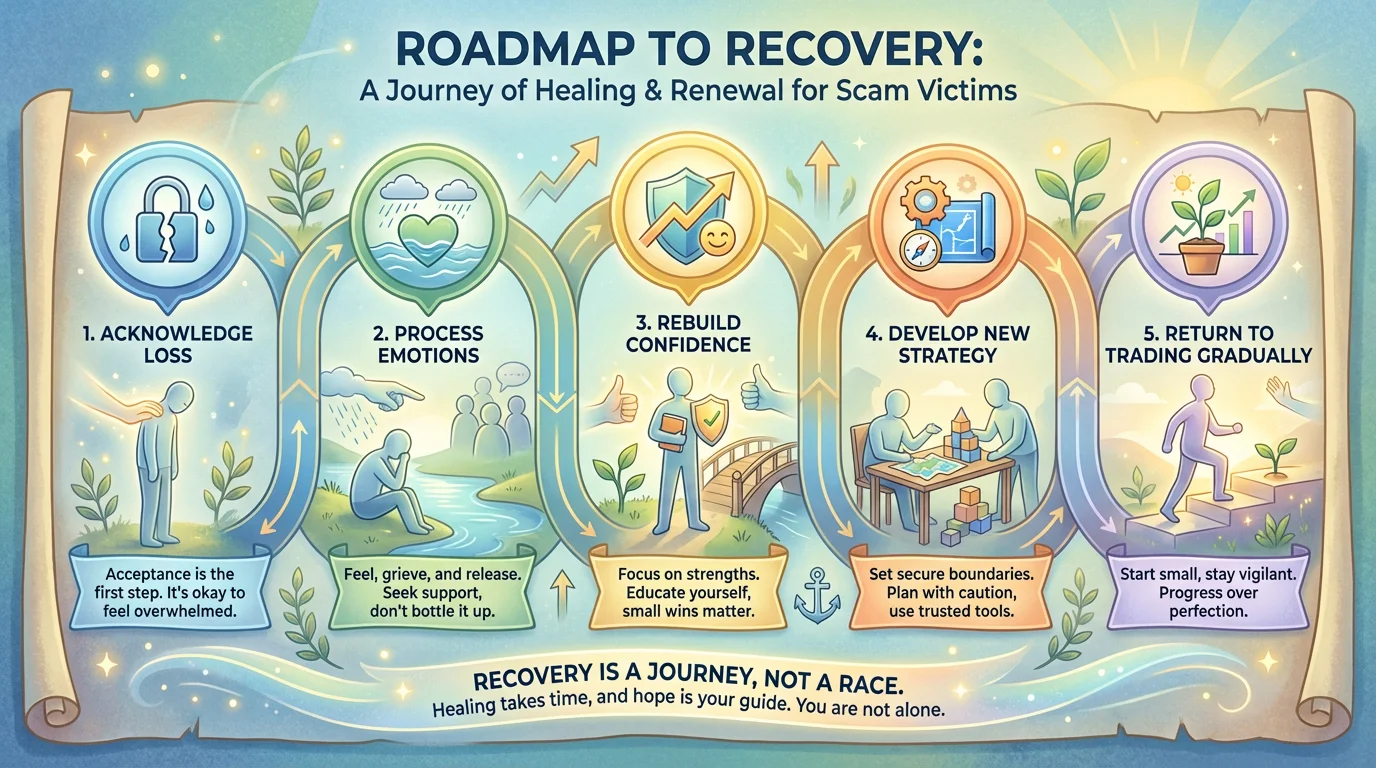
Being scammed is one of the most traumatic experiences a trader can face. The financial loss is devastating, but it is often the psychological aftermath that proves most debilitating. Victims commonly experience a complex mix of emotions: shame, anger, self-blame, anxiety, and a profound loss of trust—not just in others, but in their own judgment.
Many victims find themselves trapped in a cycle of rumination, replaying the events over and over, asking “How could I have been so stupid?” This mental loop prevents healing and can lead to a state of paralysis where the victim is unable to move forward, either in trading or in other areas of life. Some victims, desperate to recover their losses, make increasingly risky decisions, falling victim to secondary scams or engaging in revenge trading that compounds their losses.
This article is not about financial recovery strategies or legal recourse. It is about something equally important, and often overlooked: psychological recovery. It provides a comprehensive, evidence-based framework for mentally resetting after being scammed. This is about reclaiming your sense of agency, rebuilding your confidence, and transforming a devastating experience into a foundation for future resilience. If you have been scammed, this article is for you.
—
H2: Understanding the Psychological Impact of Being Scammed
Before we can heal, we must understand the wound. Being scammed is not just a financial setback; it is a form of psychological trauma.
H3: The Emotional Stages of Scam Victimization
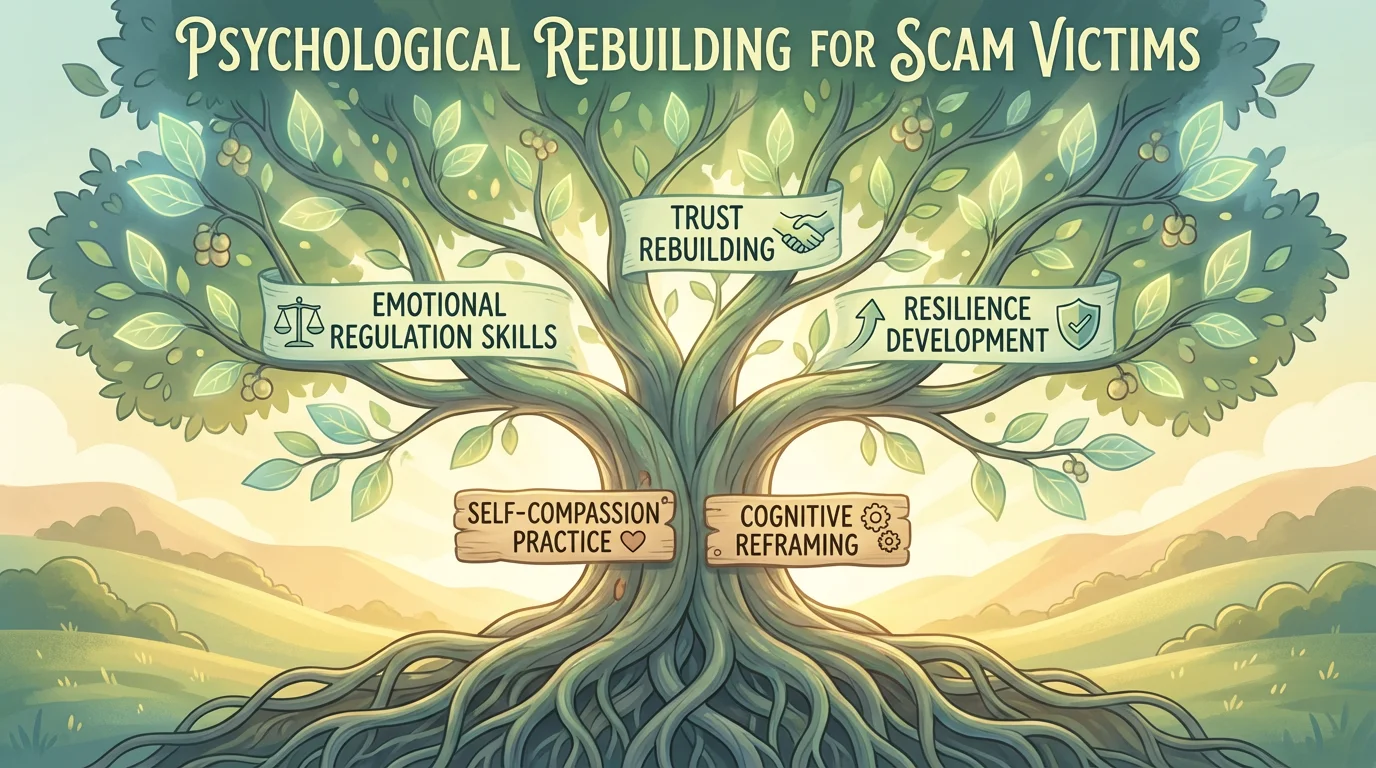
Research on fraud victims has identified a common emotional progression, similar to the stages of grief:
- Shock and Denial: “This can’t be happening. There must be a mistake.”
- Anger: Directed at the scammer, at oneself, or at the systems that failed to protect you.
- Bargaining: “If only I had done more research. If only I hadn’t been so greedy.”
- Depression: A sense of hopelessness, loss of motivation, and withdrawal from activities.
- Acceptance: Acknowledging the reality of the loss and beginning to move forward.
Not everyone experiences these stages in a linear fashion, and some may get stuck in one stage for an extended period. Understanding that these emotions are normal and expected is the first step in the healing process.
H3: The Core Psychological Wounds
Beyond the emotional stages, being scammed creates specific psychological wounds:
| Wound | Description | Impact |
|---|---|---|
| Shattered Trust | A loss of trust in others, in institutions, and in one’s own judgment. | Difficulty forming new relationships, reluctance to seek help, paralysis in decision-making. |
| Damaged Self-Esteem | Feelings of stupidity, shame, and worthlessness. | Avoidance of social situations, reluctance to share the experience, self-isolation. |
| Loss of Control | A sense that one is powerless and vulnerable. | Anxiety, hypervigilance, and difficulty taking risks or making decisions. |
| Financial Anxiety | Chronic worry about money and the future. | Sleep disturbances, difficulty concentrating, and impaired quality of life. |
H3: Why Self-Blame is So Common (and So Harmful)
One of the most pervasive and damaging responses to being scammed is self-blame. Victims often internalize the experience, believing that they were scammed because they were foolish, greedy, or naive. This self-blame is reinforced by societal attitudes that often stigmatize fraud victims.
However, self-blame is not only inaccurate; it is actively harmful. It prevents healing, increases the risk of depression, and makes victims less likely to report the crime or seek support. The truth is that scammers are sophisticated social engineers who exploit universal human psychology. Being scammed is not a reflection of your intelligence or character; it is a reflection of the scammer’s skill at manipulation.
—
H2: The Recovery Framework: A Step-by-Step Plan
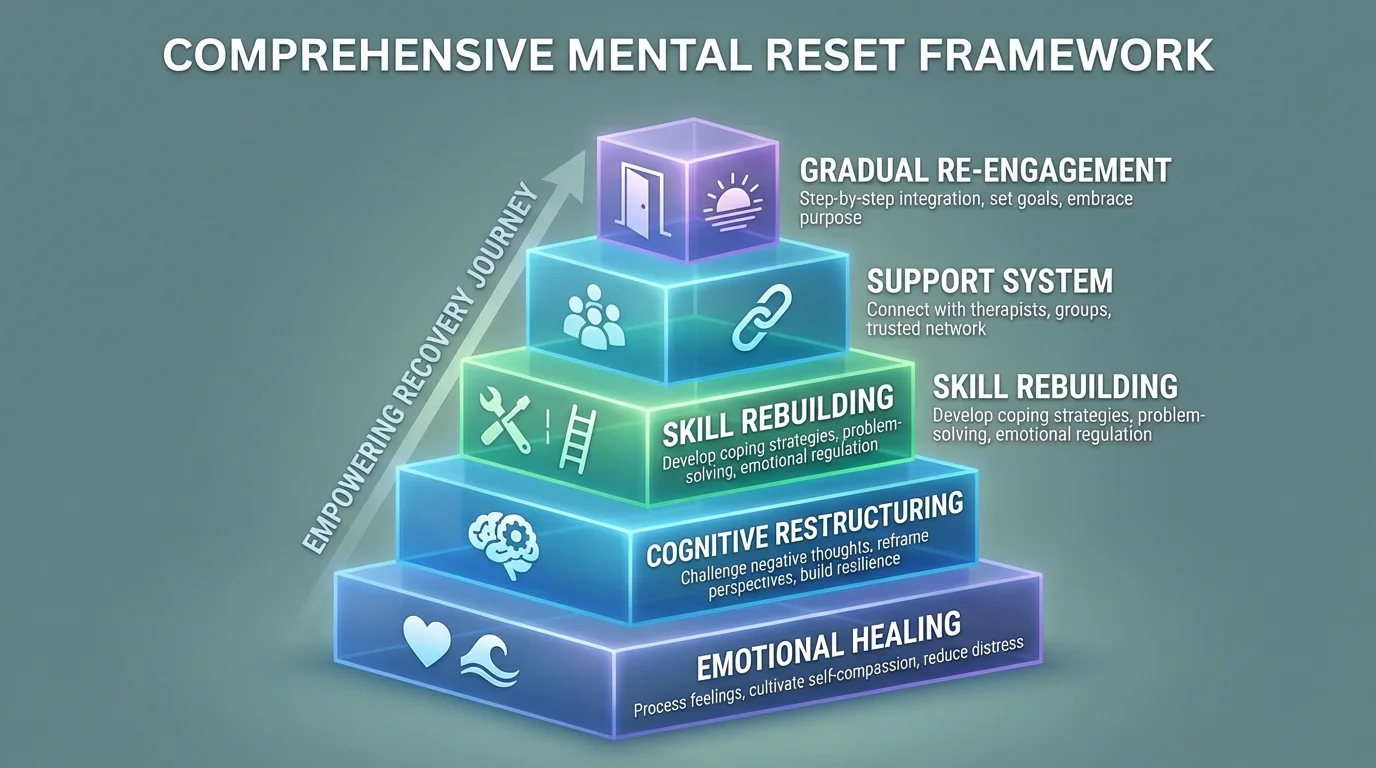
Psychological recovery from being scammed is not a passive process. It requires active, intentional steps. The following framework is based on principles from cognitive-behavioral therapy (CBT), trauma recovery, and resilience research.
H3: Phase 1: Stabilization and Safety (Week 1-2)
The immediate aftermath of discovering you’ve been scammed is a crisis period. Your first priority is to stabilize your emotional state and ensure your safety.
Step 1: Stop the Bleeding
-
- Cease All Contact: Immediately stop all communication with the scammer. Block their emails, phone numbers, and social media accounts.
- Secure Your Accounts: Change passwords for all financial accounts, email, and trading platforms. Enable two-factor authentication.
- Document Everything: Save all emails, chat logs, transaction records, and screenshots. This will be important for reporting and potential legal action.
Step 2: Reach Out for Support
-
- Tell Someone: Share what happened with a trusted friend, family member, or partner. Do not isolate yourself. Shame thrives in secrecy.
- Consider Professional Help: If you are experiencing severe anxiety, depression, or suicidal thoughts, contact a mental health professional immediately.
Step 3: Report the Scam
-
- File Reports: Report the scam to your national financial regulator, local law enforcement, and relevant online fraud reporting portals (e.g., FBI IC3, Action Fraud).
- Why This Matters: Reporting serves multiple purposes. It creates an official record, contributes to larger investigations, and is an act of agency that can help you feel less powerless.
Step 4: Practice Basic Self-Care
-
- Sleep: Prioritize getting adequate sleep, even if you need to use relaxation techniques or speak to a doctor about temporary sleep aids.
- Nutrition: Eat regular, healthy meals. Avoid excessive alcohol or substance use as a coping mechanism.
- Physical Activity: Engage in gentle exercise, such as walking. Physical activity has been shown to reduce anxiety and improve mood.
—
H3: Phase 2: Processing and Reframing (Week 3-6)
Once you have stabilized, the next phase is to process the experience and begin to reframe your understanding of what happened.
Step 5: Challenge Self-Blame with Cognitive Restructuring
Cognitive restructuring is a CBT technique that involves identifying and challenging irrational or harmful thoughts.
-
- Identify the Thought: “I was so stupid to fall for this.”
- Challenge It: “Is this thought based on facts? Would I say this to a friend who was scammed? What evidence do I have that contradicts this thought?”
- Reframe It: “I was targeted by a skilled manipulator who exploited normal human psychology. Being scammed does not make me stupid; it makes me human.”
Exercise: The “Friend Test”
Write down the harsh, self-blaming thoughts you have about yourself. Then, imagine a close friend came to you and said those same things about themselves after being scammed. What would you say to them? Write down your compassionate response. Now, apply that same compassion to yourself.
Step 6: Understand the Scammer’s Tactics
Education is empowering. Read articles (like the ones on this site) that explain how scams work, the psychological tactics used, and why smart people fall for them. This knowledge helps you externalize the blame and recognize that you were not a passive victim of your own stupidity, but an active target of a sophisticated operation.
Step 7: Write a “Scam Narrative”
Writing about traumatic experiences has been shown to aid in psychological recovery. Write a detailed account of what happened, from the first contact to the realization that you were scammed. Include:
-
- The facts of what happened.
- The emotions you felt at each stage.
- The tactics the scammer used.
- What you learned from the experience.
This exercise helps you process the experience, identify patterns, and create a sense of closure.
—
H3: Phase 3: Rebuilding and Growth (Week 7 onwards)
The final phase is about rebuilding your confidence, your skills, and your sense of agency. This is where you transform the experience from a purely negative event into a catalyst for growth.
Step 8: Rebuild Trust Gradually
Trust, once shattered, must be rebuilt slowly and intentionally.
-
- Start Small: Begin by trusting yourself in low-stakes decisions. Keep a journal of decisions you make and their outcomes. This creates evidence that your judgment is sound.
- Verify Before You Trust: Implement the verification protocols discussed in other articles on this site. Trust is earned through evidence, not through feeling.
- Seek Out Trustworthy Communities: Engage with reputable trading communities or educational platforms. Surround yourself with people who prioritize integrity and transparency.
Step 9: Develop a “Never Again” Protocol
Transform your experience into a systematic defense system.
-
- Create Your Personal Red Flag List: Based on your experience, write down the specific red flags you missed. Make this your personal checklist for evaluating future opportunities.
- Implement a Cooling-Off Period: Make a firm rule that you will never make a financial decision related to trading without a 48-hour waiting period.
- Establish a “Verification Buddy”: Identify a trusted person who you will consult before making any significant trading-related financial decision.
Step 10: Reframe the Experience as a Learning Opportunity
This is not about minimizing the pain or the loss. It is about extracting meaning and growth from a difficult experience.
-
- Ask Yourself: “What did this experience teach me about myself? About human psychology? About how to protect myself in the future?”
- Identify Strengths: Recognize the strengths you demonstrated in the aftermath. Did you reach out for support? Did you report the scam? Did you refuse to be scammed a second time? These are acts of resilience.
Step 11: Consider Helping Others
One of the most powerful ways to reclaim agency after being scammed is to help others avoid the same fate.
-
- Share Your Story: (Anonymously, if you prefer) on forums, review sites, or scam alert directories. Your story can save someone else.
- Educate: Share articles like this one. Become an advocate for scam awareness in your trading community.
—
H2: When to Seek Professional Help
While many people can recover from being scammed using self-help strategies, some situations require professional intervention. Seek help from a therapist or counselor if you experience:
- Persistent Depression: Feelings of hopelessness, loss of interest in activities, or thoughts of self-harm that last for more than two weeks.
- Severe Anxiety: Panic attacks, constant worry, or an inability to function in daily life.
- Post-Traumatic Stress Symptoms: Intrusive thoughts, nightmares, hypervigilance, or avoidance behaviors.
- Relationship Problems: If the scam is causing significant strain in your relationships with family or friends.
- Substance Abuse: If you are using alcohol or drugs to cope with the emotional pain.
A therapist who specializes in trauma, financial stress, or cognitive-behavioral therapy can provide targeted support and evidence-based interventions.
—
H2: Conclusion: From Victim to Survivor to Thriver
The journey from being scammed to full psychological recovery is not linear, and it is not quick. There will be setbacks. There will be days when the anger and shame feel overwhelming. But with intentional effort, support, and time, recovery is not only possible—it is inevitable.
You are not defined by this experience. You are not stupid, weak, or broken. You are a person who was targeted by a predator, and you are taking the steps to heal and to ensure it never happens again. That is not the profile of a victim; that is the profile of a survivor.
And beyond survival lies growth. Many people who have been scammed report that, in retrospect, the experience—as painful as it was—taught them invaluable lessons about psychology, resilience, and self-awareness that they would not have learned otherwise. They emerge not just recovered, but stronger, wiser, and more compassionate.
Your recovery is not just about returning to your pre-scam state. It is about building a new, more resilient version of yourself. And that journey starts now.
—
Frequently Asked Questions (FAQ)
Q1: How long does it take to recover psychologically from being scammed?
A1: There is no fixed timeline. For some, significant improvement can be seen within a few weeks. For others, especially if the financial loss was severe or if there were pre-existing mental health challenges, it may take several months or longer. The key is to be patient with yourself and to seek support when needed.
Q2: Is it normal to feel more angry at myself than at the scammer?
A2: Yes, this is very common. Self-blame is a natural, though harmful, response to being scammed. It is important to actively challenge this self-blame through cognitive restructuring and to remind yourself that scammers are skilled manipulators who exploit universal human psychology.
Q3: Should I tell my family and friends that I was scammed?
A3: This is a personal decision. Sharing your experience can be incredibly healing, as it breaks the cycle of shame and isolation. However, only share with people you trust to be supportive and non-judgmental. If you fear judgment, consider sharing anonymously in online support communities or with a therapist first.
Q4: Can I ever trust my judgment again?
A4: Yes. Trust in your judgment is rebuilt through evidence. Start by making small, low-stakes decisions and tracking their outcomes. Implement systematic verification processes for larger decisions. Over time, as you see evidence that your judgment is sound (especially when supported by good processes), your confidence will return.
Q5: Is it okay to take a break from trading after being scammed?
A5: Absolutely. In fact, it is often recommended. Taking a break allows you to recover emotionally and to approach trading with a clear mind when you are ready. There is no rush. The market will still be there when you return.