
In the fast-paced world of Forex trading, it’s easy to get lost in a sea of charts, technical indicators, and economic calendars. Aspiring traders often spend countless hours mastering complex strategies, believing that the right algorithm or analytical tool is the key to unlocking consistent profitability. While technical analysis is undoubtedly a crucial component of successful trading, it is only one piece of the puzzle. The most significant, and often overlooked, factor that separates winning traders from the rest is trading psychology forex. Your mind is the command center of your trading operations. It interprets market data, makes decisions under pressure, and ultimately determines your actions. Even the most sophisticated trading system is useless if it’s operated by a mind plagued by fear, greed, and cognitive biases.
Understanding Trading Psychology: The Foundation of Success
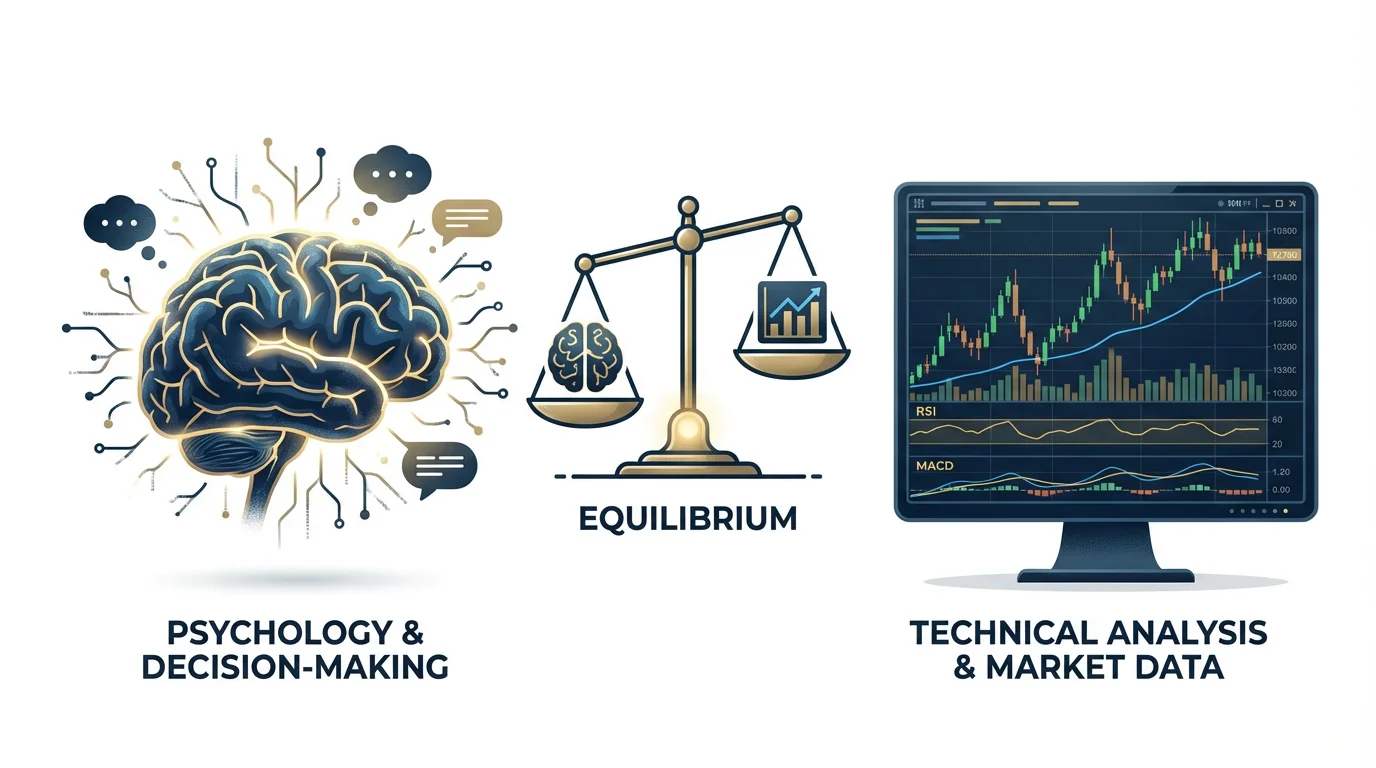
Trading psychology refers to the mental and emotional state of a trader while they are engaged in the market. It encompasses a wide range of emotions, cognitive processes, and behavioral patterns that influence decision-making. According to Investopedia, trading psychology is the emotional component of an investor’s decision-making process, which may help explain why some decisions appear more rational than others [1]. At its core, trading psychology is about managing the internal battle between logic and emotion.
The Forex market is a highly emotional environment, characterized by rapid price movements, high stakes, and constant uncertainty. This environment can trigger a host of powerful emotions, such as fear, greed, hope, and regret. These emotions, if left unchecked, can lead to impulsive and irrational decisions that deviate from a trader’s carefully crafted plan. Research in behavioral finance has shown that emotional traders consistently underperform their more disciplined counterparts, with studies indicating that emotional decision-making can reduce trading returns by as much as 30-50% [2].
The challenge is that our brains are wired for survival, not for profit. When we face uncertainty and potential loss, our amygdala—the part of the brain responsible for processing emotions—can override our prefrontal cortex, which handles rational decision-making. This is known as an amygdala hijack, and it can cause traders to make decisions that are completely contrary to their trading plans.
The Impact of Cognitive Errors on Trading Performance
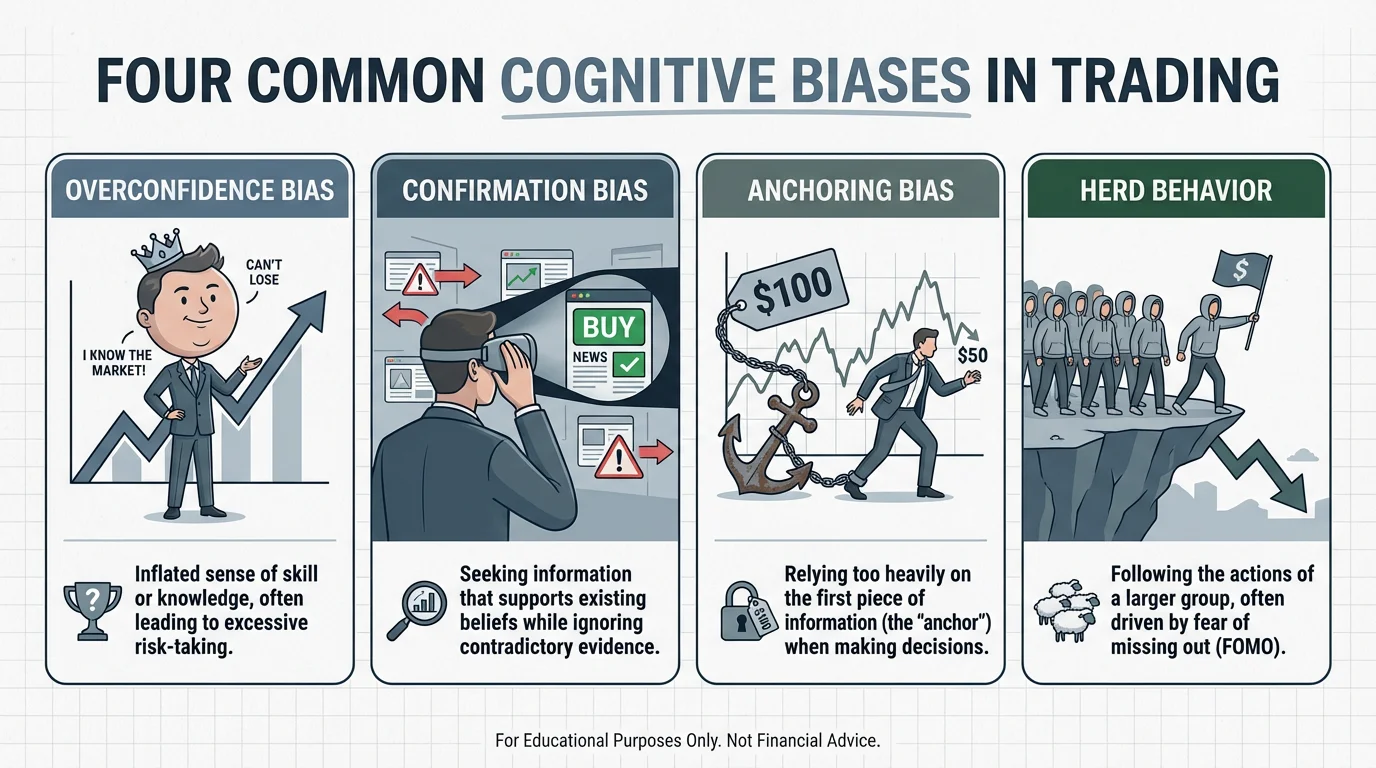
Cognitive errors, or biases, are systematic patterns of deviation from norm or rationality in judgment. They are mental shortcuts that our brains use to process information and make decisions quickly. While these shortcuts can be useful in everyday life, they can be disastrous in the world of Forex trading. Understanding these biases is the first step toward overcoming them.
Overconfidence Bias
Overconfidence is the tendency to overestimate one’s own abilities, skills, and knowledge. In trading, this can manifest as taking on excessive risk, trading too frequently, or ignoring evidence that contradicts one’s own beliefs. A trader who has had a string of successful trades may become overconfident and start to believe that they can’t lose. This can lead them to take on larger positions, ignore their risk management rules, and ultimately suffer a significant loss.
The danger of overconfidence is that it often emerges after a period of success. A trader might win five consecutive trades and begin to believe that they have “cracked the code” of the market. They may start to ignore their stop-loss orders, believing that they can manage the risk intuitively. They may also start to trade larger positions, believing that their newfound skill justifies the increased risk. When the inevitable losing trade arrives, the psychological impact is often severe, leading to emotional decision-making and further losses.
Confirmation Bias
Confirmation bias is the tendency to search for, interpret, favor, and recall information in a way that confirms or supports one’s preexisting beliefs or hypotheses. A trader who is bullish on a particular currency pair may only pay attention to news and analysis that supports their view, while ignoring any information that suggests the price may go down. This can lead to a distorted view of the market and prevent the trader from making objective decisions.
For example, a trader might read a positive economic report about a country and immediately decide to enter a long position in that country’s currency. However, they may ignore the fact that the currency is already overbought on technical charts, or that other economic indicators suggest a slowdown. By focusing only on information that confirms their bullish bias, they are setting themselves up for a loss.
Anchoring Bias
Anchoring is a cognitive bias where an individual depends too heavily on an initial piece of information offered (the “anchor”) when making decisions. In trading, this can occur when a trader becomes fixated on a particular price level, such as the purchase price of a currency pair. For example, a trader who bought a currency pair at a high price may be reluctant to sell it at a loss, even if all the evidence suggests that the price is likely to continue to fall. They are anchored to their initial purchase price and are unable to make a rational decision based on the current market conditions.
This bias can also manifest in the form of round numbers. Traders often become anchored to round price levels (e.g., 1.1000, 1.2000) and may place their stop-loss or take-profit orders at these levels, even if they don’t align with their technical analysis. This can result in suboptimal entry and exit points and can reduce the profitability of their trades.
| Cognitive Bias | Description | Impact on Trading | Real-World Example |
|---|---|---|---|
| Overconfidence Bias | Overestimating one’s own abilities and knowledge. | Taking excessive risk, overtrading, ignoring stop-loss orders. | A trader wins 5 consecutive trades and doubles their position size without reassessing risk. |
| Confirmation Bias | Seeking out information that confirms existing beliefs. | Ignoring contradictory evidence, holding onto losing trades. | A trader reads bullish news and ignores bearish technical signals. |
| Anchoring Bias | Relying too heavily on the first piece of information received. | Inability to adapt to changing market conditions, poor entry and exit points. | A trader refuses to sell a losing position because they’re anchored to their entry price. |
| Recency Bias | Overweighting recent events in decision-making. | Chasing trends, overtrading after big moves. | A trader enters a trade based on yesterday’s big move, ignoring longer-term trends. |
An Emotional Control Framework for Sustainable Trading
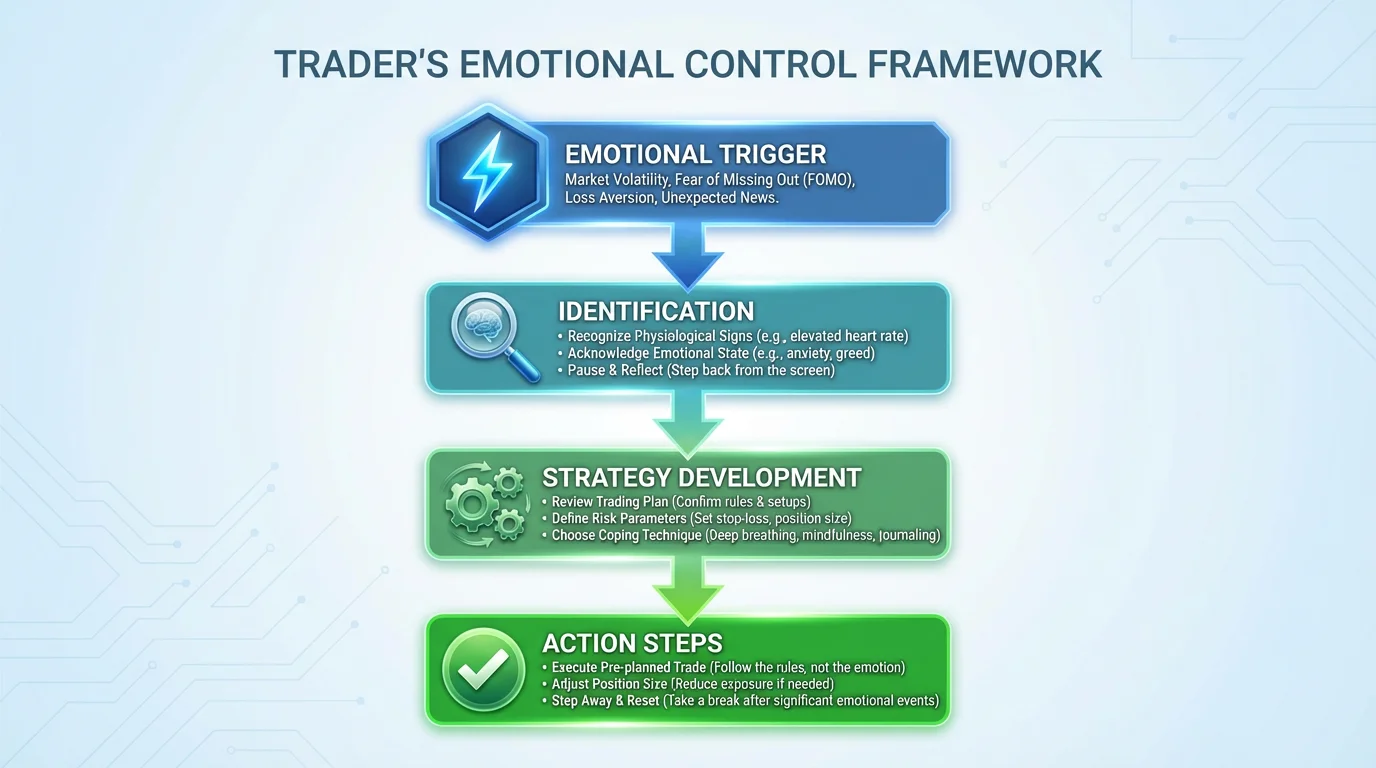
Mastering trading psychology is not about eliminating emotions entirely; it’s about learning to manage them effectively. The following framework provides a structured approach to developing emotional control that can be implemented immediately.
Step 1: Identify Your Emotional Triggers
The first step to managing your emotions is to identify what triggers them. Keep a trading journal and record not only your trades but also your emotional state before, during, and after each trade. What were you feeling when you entered the trade? Were you anxious, excited, or fearful? What happened during the trade that caused your emotions to change? By identifying your emotional triggers, you can start to develop strategies for dealing with them.
Common emotional triggers in trading include:
– Consecutive Losses: Multiple losing trades in a row can trigger frustration and desperation.
– Missed Opportunities: Watching a trade move in your favor after you’ve exited can trigger regret and FOMO.
– Unexpected Market Moves: Sudden and unexpected price movements can trigger fear and panic.
– Pressure to Perform: If you’re trading with money you can’t afford to lose, this can trigger anxiety.
Step 2: Develop a Comprehensive Trading Plan
A well-defined trading plan is your best defense against emotional decision-making. Your trading plan should outline your goals, risk tolerance, and the specific strategies you will use to enter and exit trades. It should be based on objective analysis and backtesting, not on gut feelings or emotions. By having a clear plan in place, you can reduce the uncertainty and anxiety that often lead to impulsive decisions.
Your trading plan should include:
– Entry Criteria: Specific, objective conditions that must be met before you enter a trade.
– Exit Criteria: Predetermined profit targets and stop-loss levels.
– Position Sizing: A clear rule for determining how much you will risk on each trade.
– Daily and Weekly Limits: Maximum losses you are willing to accept in a day or week.
– Trading Hours: Specific times when you will and will not trade.
Step 3: Practice Mindfulness and Meditation
Mindfulness and meditation are powerful tools for developing emotional control. Mindfulness is the practice of paying attention to the present moment without judgment. It can help you to become more aware of your thoughts and emotions without getting carried away by them. Meditation can help you to calm your mind, reduce stress, and improve your focus. Regular practice of mindfulness and meditation can help you to develop the mental discipline needed to stay calm and focused under pressure.
Research has shown that traders who practice mindfulness report lower levels of stress and anxiety, and better adherence to their trading plans. Even just 10-15 minutes of daily meditation can have a significant impact on your emotional regulation and trading performance.
The Psychological Profile of a Successful Trader
Successful traders are not born; they are made. They have developed a set of psychological traits that enable them to navigate the challenges of the Forex market with confidence and discipline. These traits include:
Discipline: The ability to stick to a trading plan, even when it’s difficult. Discipline is not about being rigid or inflexible; it’s about having the commitment to follow your plan consistently, even when emotions are running high.
Patience: The ability to wait for high-probability trading opportunities and not force trades. Many traders fail because they trade too much. Successful traders understand that not every market movement is a trading opportunity, and they are willing to wait for setups that align with their strategy.
Resilience: The ability to bounce back from losses and not let them affect future decisions. Every trader experiences losses. What separates successful traders from unsuccessful ones is their ability to learn from losses and move on without carrying emotional baggage into the next trade.
Objectivity: The ability to view the market without bias and make decisions based on evidence, not emotions. This requires a commitment to analyzing the market objectively and being willing to change your view when the evidence suggests you should.
Humility: The ability to accept that you can be wrong and that the market is always right. Successful traders have a healthy respect for the market and understand that they are not always right. This humility helps them to manage risk effectively and to avoid overconfidence.
Building Your Psychological Edge
The psychological edge is what separates consistently profitable traders from those who struggle. It’s not about having the most sophisticated trading system or the most advanced technical indicators. It’s about having the mental discipline and emotional control to execute your trading plan consistently, regardless of market conditions or emotional state.
To build your psychological edge, consider the following:
1. Keep a Trading Journal: Document not just your trades, but your thoughts, emotions, and decision-making process. Review your journal regularly to identify patterns and areas for improvement.
2. Develop a Pre-Trade Routine: Before entering any trade, go through a checklist to ensure that the trade meets your criteria and that you are in the right emotional state to execute it.
3. Use Positive Affirmations: Develop a set of positive affirmations that reinforce your trading plan and your confidence in your ability to execute it. Repeat these affirmations daily.
4. Seek Continuous Education: Invest in your education and skill development. The more you know about the market and about yourself, the more confident you will become.
5. Find a Trading Community: Connect with other traders who share your values and commitment to continuous improvement. A supportive community can provide encouragement and accountability.
Conclusion
In the world of Forex trading, your mind is your greatest asset and your greatest liability. While technical analysis and a solid trading strategy are essential, they are not enough to guarantee success. The ability to manage your emotions, overcome cognitive biases, and maintain discipline is what separates the consistently profitable traders from the rest. By investing in your trading psychology forex, you are investing in your long-term success as a trader. The journey to mastering your mind is not easy, but it is a journey that every serious trader must undertake. Remember, the market will always be there, but your mental health and emotional well-being are irreplaceable. Trade with discipline, trade with respect for the market, and trade with a commitment to continuous self-improvement.